



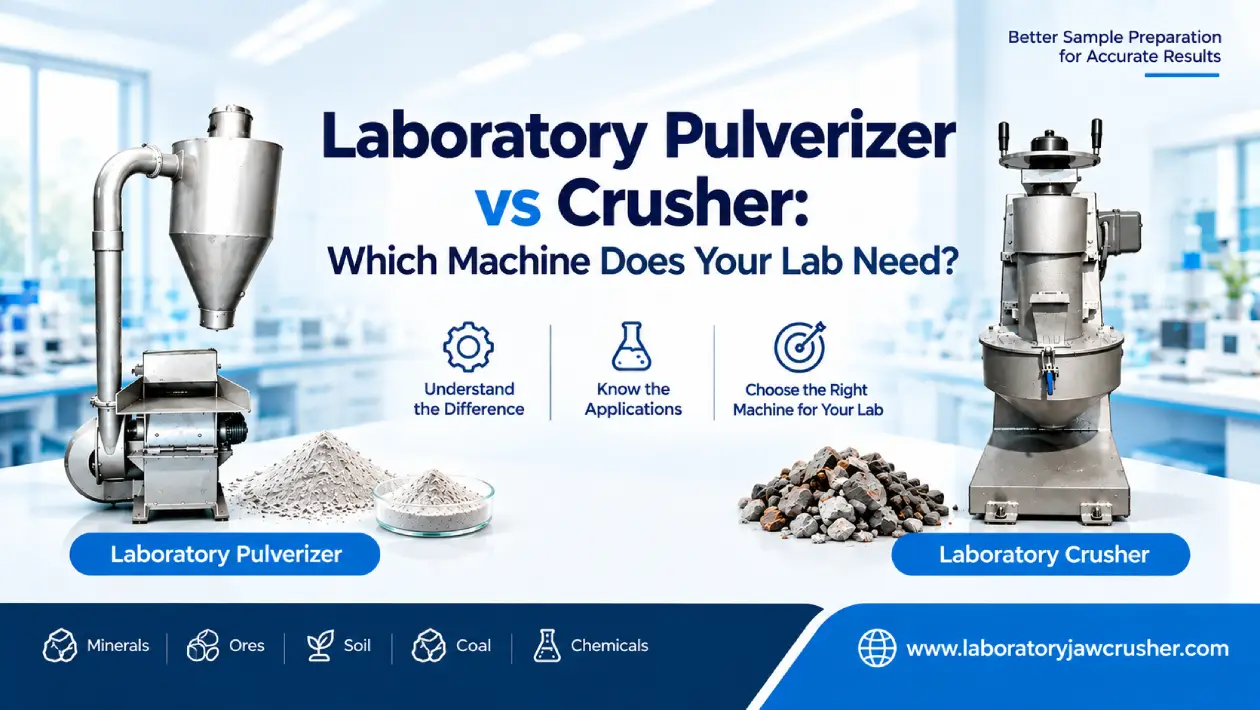
Introduction
Choosing the right prep tools is important in labs that handle minerals, ores, soil, coal, chemicals, and other materials. A lot of labs end up using two common machines.
Those two tools can be used in the same workflow, but they are built for different steps. Laboratory Pulverizer Machine are often used first. They work when the sample is large and hard. After that, a pulverizer is used to reduce the pieces to much finer sizes.
Not sure which one fits your work? Start with this key difference.
What Is a Laboratory Pulverizer Machine?
A lab crusher is used at the start to reduce the size of a sample. It is meant for pieces that are tough or too big to deal with right away.
Say you have a rock or a mineral. You may send it through a lab crusher first. After that, it is easier to move and easier to process in later steps.
Lab crushers are used for many hard materials, like:
- Geological samples
- Rocks
- Ores
- Minerals
- Concrete and construction debris
- Other tough samples
The crushed output is usually still bigger than what you get from a pulverizer.
Read More: Best Lab Pulverizer in Manufacturer India | K. S. Jandu & Sons
Laboratory Pulverizer vs Crusher
| Feature | Laboratory Crusher | Laboratory Pulverizer |
| Main purpose | Initial crushing | Fine grinding |
| Material | Large/hard samples | Pre-crushed samples |
| Output | Smaller pieces | Fine particles |
| Typical use | First stage | Further processing |
Which Machine Does Your Lab Need?
The right choice depends on your sample and testing requirements.
Choose a laboratory crusher if you mainly need to reduce large or hard samples.
Choose a Laboratory Pulverizer Machine if you need to grind already-reduced samples into finer particles.
For some applications, using both machines can be beneficial. The crusher can perform the initial size reduction, followed by the pulverizer for finer sample preparation.
Read More: Premium Electromagnetic Sieve Shaker Manufacturer in India | K. S. Jandu & Sons
How to pick a lab pulverizer that fits
If you think a pulverizer will work for your lab, check the points below before you buy anything.
1. What the material is
List the samples you plan to grind. Some are hard and rough. Others are soft. Some are dry. Some can also react with metal, so you may need a different setup.
2. The size you start with
Look up the highest feed size the unit allows. Then compare it to the size of your real samples.
3. The fineness you need
Decide how small the final powder must be. This part matters a lot in the choice of a pulverizer.
4. How much you run each time
Think about the amount you process in your day to day work. Pick a capacity that matches what you actually use.
5. What the contact parts are made of
Check the material used for parts that touch the sample. This can matter, especially if you switch between different kinds of materials.
Read More: Best Stainless Steel Pulverizers Manufacturer in India | K. S. Jandu & Sons
Why go with a trained lab pulverizer supplier?
A good supplier helps you pick the right equipment for your use. They do more than ship a basic unit.
Before you buy, ask the lab pulverizer supplier about these points:
- What materials do you plan to process
- The feed size you have
- The output particle size you need
- The expected capacity
- How the unit is built and what parts it uses
- The power it needs to run
- How maintenance should be done
- Where spare parts come from
- What help they provide for setup and daily use
- What support you get after the sale
If you share clear details about your samples and tests, the supplier can match the machine more easily.
Read More: Best Digital Sieve Shaker Manufacturer in India | K. S. Jandu & Sons
Final Thoughts
A lab crusher and a lab pulverizer both help with sample prep. Still, they do not do the same job. A crusher is usually for the first step, when you need to cut the material down in size. A Laboratory Pulverizer Machine comes next, for smaller, tighter grinding that turns the sample into a finer powder.
Before you buy any equipment, take time to map out what your samples are like. Also note what your final tests need. Once you have that, talk through the details with a skilled Laboratory Pulverizer Machine Manufacturer. They can help you pick equipment that fits your lab.
Frequently asked questions
1. Is a lab pulverizer the same as a lab crusher?
No. A crusher usually handles the first step in reducing size. A pulverizer then grinds the material down much more.
2. Can a lab pulverizer work on minerals?
Yes. Many lab pulverizers can handle mineral or ore samples. This depends on the machine specs and the kind of material you plan to test.
3. Do I need a crusher before using a lab pulverizer?
Not always. It depends on how big your sample pieces start out. It also depends on the feed size that the pulverizer can accept.
4. What matters when I buy a lab pulverizer?
You should look at the material type. Check the feed size. Decide the particle size you need. Also review the capacity and how the unit is built. Don’t forget maintenance needs and the service support available.
5. How can a lab pulverizer maker help me?
A maker can look at your use case. They can suggest machine specs that fit your goal. They can also talk about the setup, how to run the unit, and what support is offered.