



Introduction
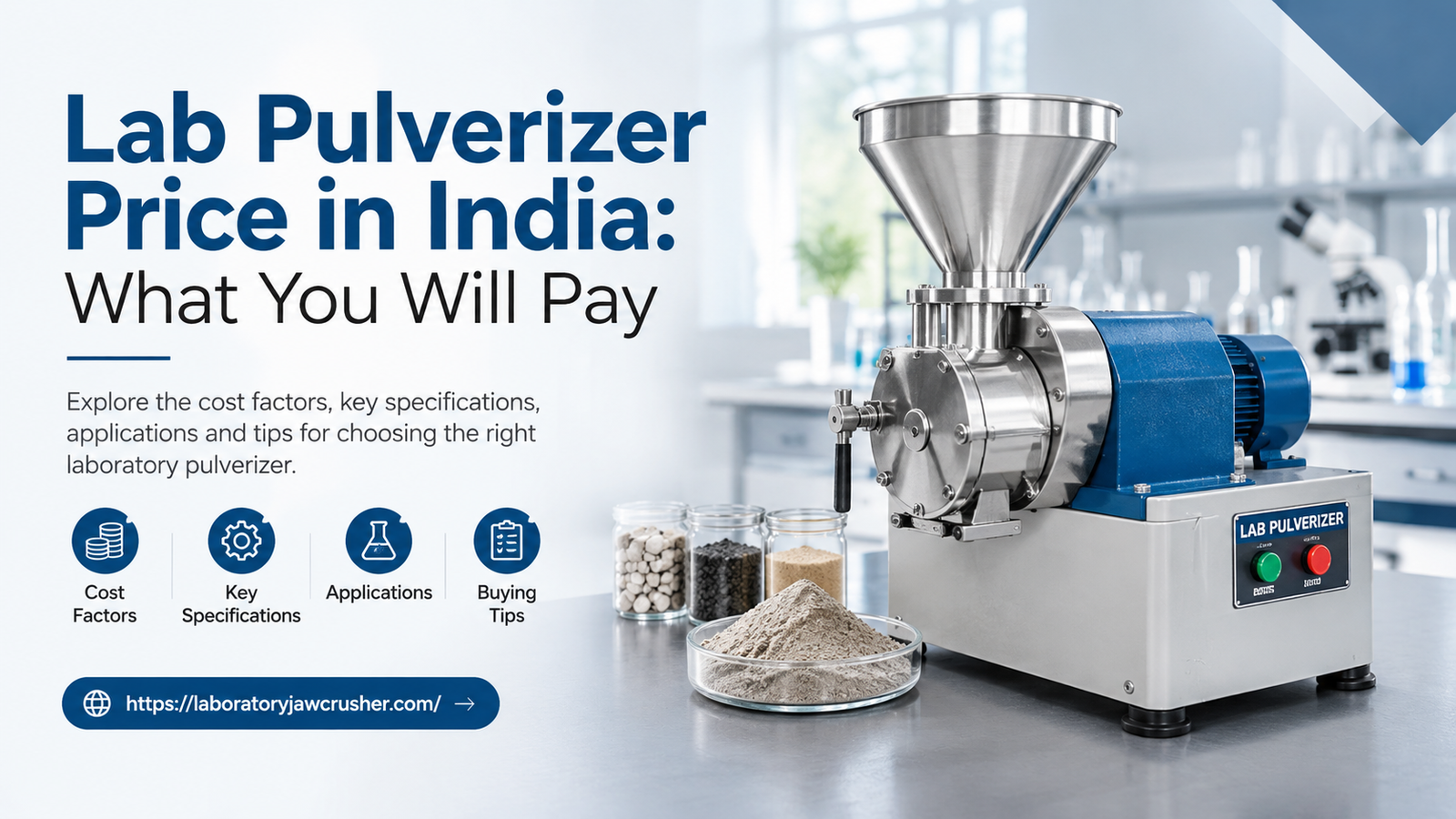
When purchasing laboratory equipment, understanding the lab pulverizer price in India is important for making the right investment. A Lab Pulverizer is widely used to grind solid materials into fine powder for testing, research, and material analysis. It is commonly used in laboratories, research institutions, educational institutes, and industrial quality control departments.
The price of a Lab Pulverizer depends on several factors, including its capacity, motor power, grinding mechanism, construction material, and specific application. Before choosing a machine, buyers should understand their requirements and compare available options to find a suitable solution.
What Is a Lab Pulverizer?
A Lab Pulverizer is a laboratory mill that crushes a particle of solid material into a fine powder. It is used for sample preparation for testing of rock, ore, coal, coke, cement, clinker, slag, soil, ceramic, and other materials. Used in mining, cement, steel, power, geological, and research laboratories.
The Lab Pulverizer is also known as a laboratory pulverizer, sample pulverizer, or lab grinding mill. Different suppliers use different names for the same device, so you can find any of these names in their catalogs.
Read More: Trusted Lab Pulverizer Manufacturer | K. S. Jandu & Sons
What Is a Lab Pulverizer Used For?
A Lab Pulverizer comminutes material crushed by a jaw crusher into a homogeneous powder that can subsequently be analyzed. The sample preparation equipment is used in practice for XRF and spectral analysis in mining, cement, coal, steel, soil, and research laboratories.
The Lab Pulverizer typically follows a lab jaw crusher as the next step in sample preparation. The crushed sample is further reduced to a fine powder suitable for the analytical instrument. Because the analytical results are based on the ground sample, the choice of a lab pulverizer is critical.
A sample preparation system using an XRF analyzer, for example, produces results that depend directly on how well the sample was prepared. Thus, the cheapest Lab Pulverizer may not be the best option because it cannot consistently provide satisfactory analytical performance.
Seven Factors That Decide the Price
1. Machine type: Various constructions have significant differences in the level of complexity, which directly impact the cost.
2. Bowl size/capacity: The bigger the bowl is, the more samples the machine can grind at one time, and the higher its price. If your lab processes several samples daily, a large-bowl device will quickly pay for itself. However, a laboratory that tests dozens of samples daily will need a higher-capacity device—to grind more samples at once.
3. Bowl material: One of the significant factors affecting the price is the material of the bowl, which is described in detail in the following section.
4. Motor power and phase: Higher power and three-phase construction will increase the price, but you also need to consider the voltage in your laboratory. To avoid buying a more expensive machine due to a lack of voltage in the laboratory, it is necessary to calculate this indicator.
5. Build quality: The frame strength, bearings, protection level, and overall design quality directly impact the machine’s working life and the amount of dust that may get into the laboratory during operation.
6. Customization: Some manufacturers provide the ability to customize a machine according to the customer’s needs, for example, by making special sizes or voltages available.
7. What is included: This factor directly affects the final price, as different manufacturers include different levels of service: installation and training of personnel, a spare bowl, and warranty service. This is the most common reason why two identical-looking machines have different prices.
Read the full guide: Lab Pulverizer Manufacturer Price in India | K. S. Jandu & Sons
Hidden Costs of Owning a Lab Pulverizer
The purchase price is only the first payment. Over several years, the costs add up:
1. Spare parts: Bowls, rings, and pucks wear out with use. Ask the supplier for the replacement set price before you buy, not after.
2. Installation and training: Some suppliers include it, and some charge separately.
3. Maintenance: Regular cleaning and inspection ensure consistency of results.
4. Electricity: Small per sample, but a substantial ongoing cost.
5. Downtime: If a worn part takes weeks to arrive, your lab can’t work. A laboratory pulverizer with a fast spare parts supply is often more economical in practice, even if the quote is higher.
Read More: Laboratory jaw crusher manufacturer | K. S. Jandu & Sons
Applications of Laboratory Pulverizer Machines
Laboratory pulverizers are primarily used in various industries that demand material grinding and sample preparation.
Mining and Mineral Testing
These machines can be used in laboratories to pulverize the materials needed for chemical examination and other related tests.
Cement and Construction Materials
A testing lab may involve the reduction of cement, aggregates, and other suitable construction materials to smaller particles for analysis.
Research and Educational Institutions
Research and educational laboratories utilize the grinding machine in experiments, demonstrations, and material analysis.
Industrial Quality Control
This involves the manufacturing and processing industry and uses laboratory pulverizers to prepare samples for testing purposes.
The pulverizing machine selected should depend on the type of material that needs to be ground, the desired fineness, and the tests performed.
Read More: Laboratory Pulverizer Machine | K. S. Jandu & Sons
How to Compare Lab Pulverizer Quotations
- Is the bowl size the same?
- Is the bowl material the same?
- Same motor power and phase?
- Does it come with a spare bowl set?
- Is installation and training included?
- What does the warranty cover, and how long?
- GST and freight included or not?
- How long is the delivery time?
Why Buy from a Lab Pulverizer Manufacturer?
Purchasing from an experienced laboratory pulverizer manufacturer can help buyers obtain equipment that matches their application requirements.
A reliable manufacturer should provide clear technical specifications, information about machine capacity, operating instructions, and details about available support.
Before finalizing your purchase, request a quotation and compare the specifications of different models. Instead of choosing only the lowest-priced option, consider machine performance, build quality, maintenance, and suitability for your laboratory.
K. S. Jandu & Sons offers laboratory equipment for different testing and sample preparation requirements. Buyers can explore the available product range and contact the company to discuss their specific needs.
Read More: Lab Pulverizer Supplier | K. S. Jandu & Sons
Conclusion
The best Lab Pulverizer is not the cheapest option on the quote sheet. It is the one that grinds your sample to the demanded size without contamination and continues working reliably for years with spare parts readily available.
Let’s start with the material you want to grind, its quantity, and fineness. Then, take one specification and compare the Lab Pulverizer quotes to see the difference in spare parts and support. If you are planning on a purchase, contact us with your requirements, and we will find you the best option and provide a quote.
Frequently Asked Questions
1. What is the price of a Lab Pulverizer in India?
The price depends on the type, bowl size, bowl material, and motor power. Hence, it is necessary to send your requirements to receive a proper offer.
2. Why do pulverizer prices vary so much?
The manufacturing process, materials, capacity, motor, and additional services determine the price. Do not forget to learn about all the specifications when you choose a machine.
3. Which material is better for a bowl?
It depends on the sample; steel is suitable for any material, tungsten carbide is the best solution for hard minerals, and zirconia is ideal for avoiding metal contamination.
4. Do you provide installation and training?
It depends on the company; ask this question when you contact the manufacturer.
5. Can I have a sample ground before purchasing?
You need to ask this question when you contact a supplier. In any case, pilot-scale grinding is the best option to ensure that the equipment meets all the requirements and to determine the contamination level.